Driving in Madeira is unlike driving anywhere else in Europe. The island is essentially a mountain rising from the Atlantic, and its roads follow the terrain — climbing through cloud layers, hugging cliff edges above the sea, plunging through tunnels carved into rock, and winding through valleys so deep and green they look like something from a fantasy novel.
It can feel intimidating before you start. It feels extraordinary once you do. This guide covers everything you need to know to drive in Madeira confidently and safely — the best routes, the essential tips, the parking realities, and the things that catch first-time visitors off guard.
What Makes Driving in Madeira Different
The first thing to understand is the gradient. Madeira's roads climb and descend constantly. The road from Funchal to Pico do Arieiro gains over 1,700 metres of altitude in about 30km. The north coast road drops from mountain passes to sea level and back up again. Even within Funchal city, some streets are steep enough to make hill starts genuinely challenging.
The second thing is the width. Village lanes and some mountain roads are narrow — sometimes barely wide enough for two cars to pass. Locals know these roads and drive them confidently. As a visitor, the key is to slow down, stay to the right, and use passing places when you encounter oncoming traffic on narrow sections.
The third thing is the tunnels. Madeira has an extensive network of road tunnels that cut through the mountains and connect different parts of the island. They're well-lit and well-maintained, but some are long — the Túnel do Paúl da Serra is over 1.5km — and the transition from bright daylight to tunnel darkness requires a moment of adjustment.
The Best Scenic Drives in Madeira
Once you're comfortable with the roads, Madeira offers some of the most spectacular driving in Europe. These are the routes that make the biggest impression.
The North Coast Road (VE2): Ribeira Brava to Porto Moniz
This is the drive that defines Madeira for most visitors. The VE2 runs along the north coast from Ribeira Brava to Porto Moniz, passing through tunnels, past waterfalls that fall directly onto the road, and through small fishing villages that feel completely untouched by mass tourism.
The highlight is Seixal Beach — a crescent of black volcanic sand sheltered by towering green cliffs, with a natural pool fed by a mountain waterfall. Get there before 10am in summer. Continue to Porto Moniz, where natural lava pools at the edge of the Atlantic make for one of Madeira's most memorable swimming experiences. The drive back via the mountain road through Encumeada adds another dimension: views across both coasts from the island's spine.
Paul da Serra: Driving Above the Clouds
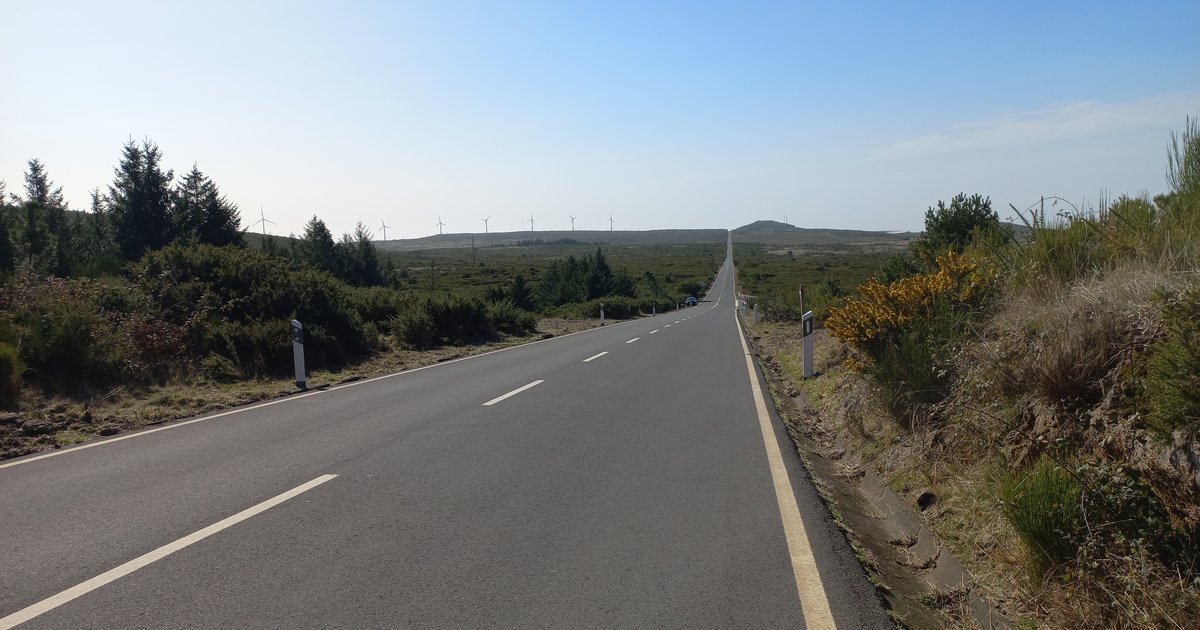
The Paul da Serra plateau sits at around 1,400 metres and is often wrapped in cloud. The ER110 road across the plateau is completely unlike any other road on the island — wide, open, almost treeless, with a strange otherworldly quality when the fog rolls in. On clear days, the views across the island are extraordinary. The Fanal forest at the western end of the plateau, with its ancient laurel trees draped in moss, is one of Madeira's most atmospheric places.
ER103: Through the Laurissilva Forest
The road connecting Funchal to Faial via the Laurissilva forest — a UNESCO World Heritage Site — is one of the most beautiful drives on the island. It's winding and steep in places, but the reward is constant: ancient laurel trees, dramatic valley views, and the feeling of driving through a landscape that has barely changed in centuries. Ribeiro Frio, with its trout farm and the Balcões viewpoint, is the natural stopping point.
🚗 Ready to Drive Madeira's Most Spectacular Roads?
Compare car rental prices in Madeira from trusted local companies. Full insurance available, no deposit required.
Essential Safety Tips for Driving in Madeira
Madeira's roads are safe — but they require a different kind of attention than flat, straight motorways. These tips will make your driving experience both safer and more enjoyable.
Choose the Right Car
This is the most important decision you'll make before you start driving. A 1.0-litre engine that's fine on flat roads will struggle on Madeira's mountain climbs. Choose a minimum of 1.2 litres for solo or couple travel; 1.5 litres or above for groups or heavy luggage. If you're not confident with a manual gearbox on steep hills, book an automatic — the constant gear changes on mountain roads become tiring, and hill starts in Funchal can be genuinely challenging.
Use Engine Braking on Descents
On long descents, use a lower gear to slow the car rather than riding the brakes continuously. Sustained brake use on steep descents can cause brake fade — the brakes overheat and become less effective. Shift down to second or third gear and let the engine do the work. This is especially important on the descent from Encumeada to São Vicente and on the road from Pico do Arieiro.
Watch for Waterfalls on the Road
On the north coast road, waterfalls sometimes flow directly across the tarmac — especially after rain. These sections are wet and can be slippery. Slow down, don't brake suddenly, and drive through steadily. It's one of the most dramatic experiences on the island, but it requires care.
Animals on Mountain Roads
Cattle and goats occasionally wander onto mountain roads, particularly on the Paul da Serra plateau. Drive at a speed that allows you to stop safely if an animal appears around a blind corner.
Fog on High Roads
The Paul da Serra plateau and the road to Pico do Arieiro can be completely fogged in, with visibility dropping to a few metres. If you encounter dense fog, slow down significantly, use fog lights if available, and consider turning back if conditions are dangerous. Check the weather forecast before driving to high-altitude areas.
Parking in Madeira: What You Need to Know
Parking in Madeira is generally straightforward outside of Funchal city centre, where it can be competitive in peak season. Here's what to expect.
Funchal City Centre
Funchal has several multi-storey car parks in the city centre — the most convenient are near the seafront and the old town. Street parking is available but limited. Blue zone street parking requires a parking disc (available from petrol stations and tobacconists) and has time limits. Parking fines are enforced.
Viewpoints and Natural Sites
Most major viewpoints (miradouros) have dedicated car parks, usually free. Arrive early in summer — popular spots like Cabo Girão and Pico do Arieiro fill up quickly by mid-morning. The car park at Seixal Beach is small and fills up fast; arrive before 9am in July and August.
Village Centres
Most villages have small car parks near the main square. These are usually free. In narrow village lanes, park only in designated spaces — blocking a lane on a mountain road creates real problems for local traffic.
🚗 Drive Madeira With Confidence
Book your rental car in Madeira with full insurance and no deposit. Compare prices from local companies and start your road trip.
Driving Laws and Rules in Madeira
Madeira follows Portuguese road law, which is part of the EU framework. The key rules to know:
Speed Limits
50km/h in urban areas, 90km/h on regional roads, 100km/h on expressways. Mountain roads often have lower posted limits — follow the signs. Speed cameras are present on the main expressways and at some tunnel entrances.
Alcohol Limit
The legal blood alcohol limit in Portugal is 0.5g/L (lower than the UK's 0.8g/L). For drivers with less than 3 years of experience, the limit is 0.2g/L. Random breath tests are conducted, particularly at weekends.
Mobile Phones
Using a handheld mobile phone while driving is illegal and carries a significant fine. Use a hands-free mount or pull over safely to use your phone for navigation.
Seat Belts and Child Seats
Seat belts are compulsory for all passengers. Children under 135cm must use an appropriate child seat or booster. Child seats can be rented from most car hire companies — book in advance in peak season.
Frequently Asked Questions About Driving in Madeira
Is driving in Madeira difficult for beginners?
It's more challenging than driving on flat, straight roads, but it's absolutely manageable. The key is to choose the right car (enough engine power, automatic if in doubt), drive at a sensible pace, and not rush. Most visitors find that after half a day on the roads, they're completely comfortable.
Do I need an international driving licence to drive in Madeira?
EU driving licences are fully valid. UK licence holders (post-Brexit) are generally accepted by rental companies, but an International Driving Permit (IDP) is recommended as a precaution. Non-EU visitors should carry an IDP alongside their national licence.
Are there toll roads in Madeira?
No. Madeira has no toll roads. The expressways and tunnels are all free to use.
What side of the road do they drive on in Madeira?
The right side, like mainland Portugal and the rest of continental Europe.
Is petrol expensive in Madeira?
Fuel prices in Madeira are similar to mainland Portugal, which is broadly in line with European averages. Petrol stations are well distributed across the island, including near the airport and in all major towns.