How to Drive in Split & Dalmatia: Rules, Tips, and Parking Guide
So, you’re planning a trip to Croatia’s stunning Dalmatian Coast. You’ve seen the photos of the crystal-clear Adriatic Sea, the dramatic limestone cliffs, and the ancient stone villages. Now, you’re probably wondering: "Should I rent a car? Is driving in Split difficult? What are the rules?"
Let me put your mind at ease right now: driving in Dalmatia is one of the most rewarding travel experiences in Europe. Yes, the coastal roads can be winding, and yes, parking in a 1,700-year-old city requires a bit of strategy. But the sheer freedom of having your own vehicle—the ability to pull over at a hidden beach, explore a mountain vineyard, or escape the crowded tourist buses—makes renting a car an absolute no-brainer.
If you’re on the fence about whether to rely on public transport or take the wheel yourself, let this guide be your deciding factor. I’m going to break down everything you need to know about driving in Split and the surrounding Dalmatian region. From navigating the toll roads to mastering the art of Croatian parking, consider this your ultimate road trip survival guide.
The Basics: Essential Road Rules in Croatia
Before you turn the key in the ignition of your rental car, you need to know the ground rules. Driving in Croatia is very similar to driving in the rest of mainland Europe, but there are a few local quirks you should be aware of to avoid unwanted fines.
- Drive on the Right: Like most of Europe and North America, Croatians drive on the right side of the road and overtake on the left.
- Seatbelts are Mandatory: This applies to everyone in the car, both in the front and back seats. The police do check, and the fines are steep.
- Headlights On: During the winter months (from November 1st to March 31st), you must drive with your dipped headlights on at all times, even during the day. During the summer, they are only required at night or in conditions of poor visibility (like heavy rain or inside tunnels).
- The Alcohol Limit is Strict: The legal blood alcohol limit in Croatia is 0.05% for drivers over 24 years old. However, if you are under 24, or if you are driving a commercial vehicle, the limit is an absolute 0.00%. My advice? If you’re driving, stick to sparkling water. Save the local wine for when you’re safely back at your hotel.
- No Phones Allowed: Using a handheld mobile phone while driving is strictly prohibited. If you need to use your phone for GPS navigation (which you will), make sure you bring a dashboard mount or rent a car with Apple CarPlay/Android Auto.
- Right of Way: Unless signs indicate otherwise, vehicles approaching from the right always have the right of way at unmarked intersections.
Ready to Hit the Croatian Roads?
Don't let bus schedules ruin your vacation. Book your rental car today and enjoy the ultimate freedom to explore Dalmatia.
Speed Limits and Speed Cameras: Don't Ruin Your Vacation
Croatian police take speed limits seriously, and the country has recently invested heavily in a network of modern speed cameras. Getting a speeding ticket in the mail weeks after you return home is a terrible souvenir. Here is what you need to know about speed limits in Dalmatia:
- Urban Areas (Cities and Towns): 50 km/h (31 mph). Pay close attention when driving through the small coastal villages along the D8 highway; the speed limit drops quickly as you enter town limits.
- Open Roads (Outside built-up areas): 90 km/h (56 mph).
- Expressways (Brza cesta): 110 km/h (68 mph).
- Highways/Motorways (Autocesta): 130 km/h (81 mph).
Watch out for the cameras: Fixed speed cameras are housed in tall, grey or white boxes on the side of the road. They are usually preceded by a blue warning sign featuring a camera icon. Mobile police units with radar guns are also very common, especially on the scenic coastal road (Jadranska Magistrala) during the busy summer months. Use a navigation app like Waze or Google Maps, as they are generally very good at alerting you to upcoming speed traps.
Navigating the Highways (Autocesta) and Tolls
If you want to cover long distances quickly—say, driving from Zagreb down to Split, or from Split down towards Dubrovnik—you will be using the Croatian highway system, known as the Autocesta. These roads (marked with an 'A', like the A1) are modern, wide, beautifully maintained, and incredibly scenic.
However, they are not free. Croatia operates a closed toll system. Here is how it works:
- Taking a Ticket: When you enter the highway, you will drive through a toll booth. Press the button on the machine to take a paper ticket. Keep this ticket safe! If you lose it, you will be charged the maximum possible toll for that highway.
- Paying the Toll: When you exit the highway, you will hand your ticket to the attendant in the booth (or insert it into the automated machine). The toll is calculated based on the distance you traveled.
- Payment Methods: You can pay the toll using cash (Euros are the official currency in Croatia) or with a major credit/debit card. The card lanes are usually much faster, so look for the signs indicating card payments (often marked with a bank card symbol) as you approach the exit booths.
Pro Tip: If you are not in a rush, consider taking the D8 coastal road instead of the A1 highway. It takes longer, but it is completely toll-free and offers some of the most spectacular ocean views in the world.
The Ultimate Guide to Parking in Split
Let’s address the elephant in the room: parking in Split during the summer can be a headache if you don’t know what you’re doing. The historic center (Diocletian’s Palace and the Riva promenade) is a strict pedestrian-only zone. Do not attempt to drive into the narrow stone alleys; you will get stuck, and you will get fined.
Here is how to handle parking in Split like a local:
Understanding the Parking Zones
Street parking in Split is divided into color-coded zones, which dictate the price and the maximum time you can park.
- Zone 1 (Red/Zone A): Closest to the city center. It is the most expensive and often has a strict time limit (usually 2 hours maximum).
- Zone 2 (Blue/Zone B): Slightly further out, cheaper, and usually allows for longer parking times.
- Zone 3 (Green/Zone C): Further from the center, the cheapest option, and ideal for leaving your car for the whole day.
How to Pay for Street Parking
You can pay at the physical parking meters on the sidewalk (they accept coins), but the easiest way is to use the Bmove app (formerly PayDo) or the Split Parking app. You simply enter your license plate, select your zone, and pay with your credit card. It’s incredibly convenient and saves you from hunting for change.
The Best Parking Lots in Split
If you don’t want to deal with street parking, head straight to one of the large, dedicated parking lots just outside the pedestrian zone:
- Stari Plac (Old Ground): Located just a 5-minute walk from the palace walls. It’s very convenient but fills up quickly in the morning.
- Ferry Port Parking: There are several large open-air lots near the ferry terminal and the main bus station. These are great if you are catching a ferry or just want a guaranteed spot close to the Riva.
- Acorus Garage: A modern, multi-story underground parking garage located about a 10-minute walk from the center. It’s slightly more expensive, but your car stays cool in the shade, which is a huge bonus in July.
Don't Let Transport Stress Ruin Your Trip
Having your own car means you park where you want, leave when you want, and explore without limits. Secure your vehicle today.
Taking Your Rental Car on a Ferry
One of the absolute best reasons to rent a car in Split is the ability to take it on a ferry to explore the spectacular Dalmatian islands like Hvar, Brač, Vis, and Korčula. Having a car on the islands allows you to reach secluded beaches and mountain villages that are completely inaccessible by public transport.
Here is what you need to know about island-hopping with a car:
- Check with Your Rental Company: This is crucial. Before you book your ferry ticket, you must ensure that your rental agreement allows you to take the car on a ferry. Most companies allow it, but they usually require you to purchase an additional "Ferry Insurance" add-on to cover the vehicle while it is at sea.
- Book Your Ferry Tickets in Advance: The main ferry operator in Croatia is Jadrolinija. During the summer, the car ferries (especially to popular islands like Hvar and Brač) sell out quickly. Book your tickets online several days in advance.
- Arrive Early: Even if you have a ticket, boarding is usually on a first-come, first-served basis. You should aim to arrive at the ferry port in Split at least 60 to 90 minutes before your scheduled departure time to get your car in line.
Driving the Dalmatian Coast: The D8 Highway
If you have the time, you absolutely must drive a section of the D8 state road (Jadranska Magistrala). This coastal highway stretches all the way from Rijeka in the north down to Dubrovnik in the south, passing right through Split.
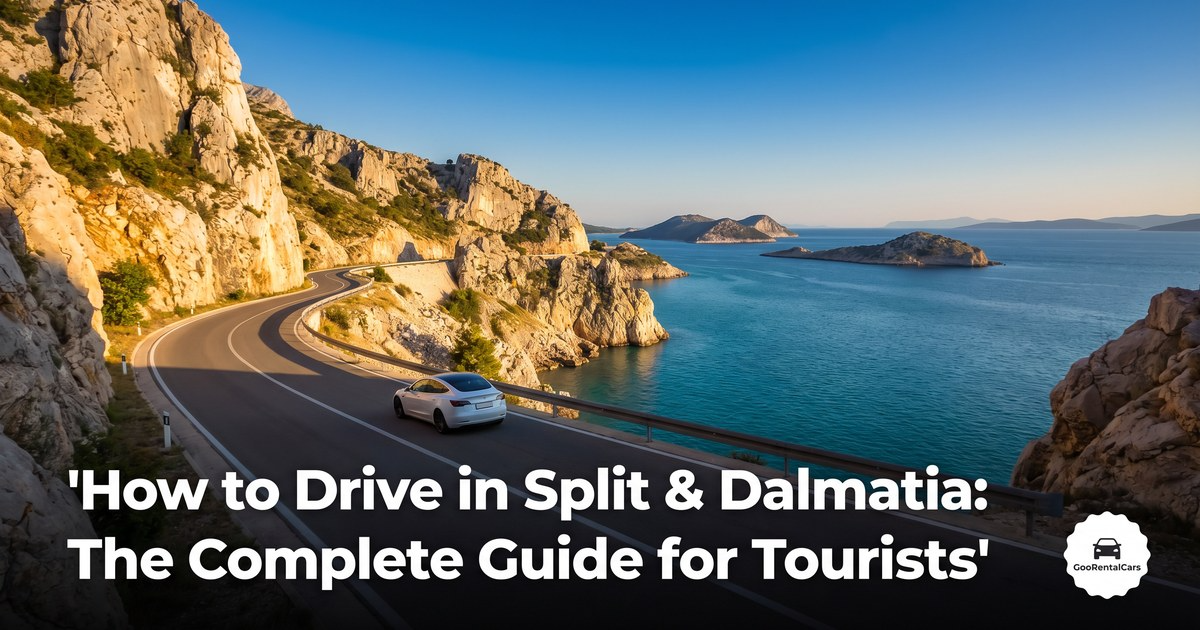
It is widely considered one of the most beautiful coastal drives in the world. The road hugs the cliffs, offering sheer drops into the turquoise Adriatic Sea on one side and towering limestone mountains on the other. It’s the perfect route for a leisurely road trip, allowing you to pull over at small fishing villages, buy fresh fruit from roadside vendors, and discover hidden swimming spots.
Just remember: the D8 is a two-lane road, and it can be slow-going behind campervans or local buses. Don’t use this road if you are in a hurry. Use it when the journey itself is the destination.
Frequently Asked Questions (FAQ)
1. Do I need an International Driving Permit (IDP) to drive in Croatia?
If your driver’s license was issued by an EU country, you do not need an IDP. If you are visiting from outside the EU (such as the USA, Canada, or Australia), an International Driving Permit is legally required in Croatia. You must carry it alongside your original national driver's license. Rental companies may refuse to give you the car if you cannot produce an IDP.
2. Is driving in Split safe for tourists?
Yes, driving in Split and the surrounding region is very safe. The roads are generally in excellent condition. The only real challenge is the aggressive driving style of some locals, who may tailgate or overtake in tight spots. Just stay calm, stick to the speed limit, and let them pass.
3. Can I use a credit card to pay for tolls and parking?
Yes, major credit cards (Visa, Mastercard) are widely accepted at all highway toll booths. For street parking in Split, it is highly recommended to download a local parking app (like Bmove) to pay with your card, though physical meters still accept coins.
4. What should I do if I get a traffic fine?
If you receive a parking ticket on your windshield, you can usually pay it at a local post office or bank. If you are pulled over for a moving violation (like speeding), the police may ask you to pay the fine on the spot. Always ask for an official receipt. Do not ignore fines, as the rental company will eventually track you down and charge your credit card, plus a hefty administrative fee.
5. Is it easy to find petrol stations in Dalmatia?
Yes, petrol stations (like INA, Crodux, and Lukoil) are plentiful along the highways and near major towns like Split. However, if you are driving on the islands or in remote mountainous areas, stations can be sparse. Always keep your tank at least half full when exploring off the beaten path.
6. Can I drive my rental car into Bosnia to get to Dubrovnik?
If you are driving from Split to Dubrovnik, you must pass through the Neum corridor, a 9-kilometer stretch of coastline that belongs to Bosnia and Herzegovina. Yes, you can drive through it, but you must inform your rental company. You will need a "Cross Border Card" (Green Card) to prove your insurance is valid outside the EU. You will also need your passport to cross the border checkpoints.
Related Articles
- Car Rental Split: Your Complete Guide to Exploring Dalmatia
- Car Rental Split Airport (SPU): Everything You Need to Know
- Best Things to Do in Split by Car: The Ultimate Road Trip Itinerary
Start Your Dalmatian Road Trip Today
Experience the freedom of the open road. Compare prices and book your perfect rental car in Split now.


