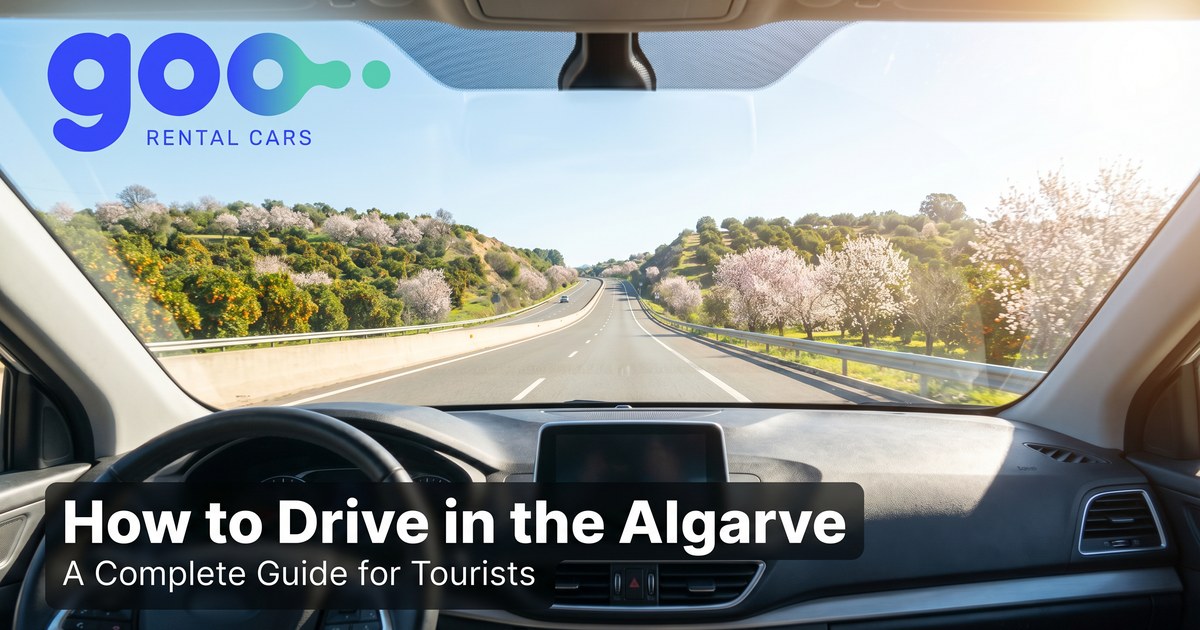
Planning to explore the Algarve’s stunning coastline, charming villages, and hidden gems? Driving here is the ultimate way to unlock the region’s magic at your own pace. Whether you’re craving secluded beaches or lively towns, having a rental car gives you unmatched freedom and flexibility.
☀️ Discover the Algarve Your Way
Compare rental cars easily and find the perfect vehicle for your trip.
Why Renting a Car Is the Best Way to See the Algarve
We at GooRentalCars always recommend renting a car when visiting the Algarve. Public transport is limited outside the main towns, and taxis can quickly become expensive. With your own wheels, you can explore hidden beaches, quaint villages, and scenic viewpoints that are impossible to reach otherwise.
Driving gives you the freedom to set your own schedule, stop whenever you want for photos or a coffee, and avoid crowded buses or tours. Plus, many of the Algarve’s best spots are spread out, making a car the most practical and enjoyable way to travel.
Understanding the Roads: A22 Toll Road vs N125
The Algarve’s road network mainly consists of two key routes: the A22 toll highway and the N125 national road. Knowing when and how to use each will save you time and money.
The A22 Highway (Via do Infante)
The A22 is a modern, multi-lane highway stretching from the Spanish border to Lagos. It’s perfect for covering long distances quickly, with speed limits up to 120 km/h (75 mph). The road is generally well-maintained and less congested than the N125.
Important: The A22 is an electronic toll road, meaning there are no toll booths. Cameras record your license plate, and toll fees are charged automatically.
The N125 National Road
The N125 is the older coastal route, free to use but slower and busier. It passes through towns, villages, and commercial areas, often with traffic lights and roundabouts. This road is ideal for short trips or when you want to experience local life and stop at roadside shops or cafes.
For longer journeys, we at GooRentalCars suggest using the A22 with a Via Verde transponder to avoid delays and enjoy a smoother drive.
How the Electronic Tolls Work (Via Verde)
The electronic toll system in the Algarve can be confusing if you’re not prepared. The A22 uses cameras to capture your car’s license plate, and tolls must be paid within 48 hours to avoid fines.
When booking your rental car through GooRentalCars, you can often add a Via Verde transponder. This small device attaches to your windshield and automatically records tolls, charging them to your rental account. It usually costs around €1.50 to €2.00 per day but saves you from the hassle of manual payments and potential fines.
If you don’t have a Via Verde, you’ll need to pay tolls at local post offices or online within two days of driving the A22, which can be inconvenient and time-consuming.
🚦 Avoid Toll Hassles in the Algarve
Book your rental car with a Via Verde transponder included for a stress-free drive.
Driving Rules and Speed Limits in Portugal
Driving in Portugal is on the right-hand side of the road, and seat belts are mandatory for all passengers. Here are some key rules to keep in mind:
- Speed limits: 50 km/h (31 mph) in urban areas, 90 km/h (56 mph) on rural roads like the N125, and 120 km/h (75 mph) on highways such as the A22.
- Roundabouts: Vehicles inside the roundabout have priority. Always yield to traffic coming from your left and use indicators when exiting.
- Overtaking: Use the left lane on highways only for overtaking. Portuguese drivers can be assertive, so be prepared to move right after passing.
- Alcohol limit: The legal blood alcohol limit is 0.05%. It’s safest to avoid drinking if you’re driving.
We at GooRentalCars recommend familiarizing yourself with local signs and driving customs to ensure a safe and enjoyable trip.
Parking in the Algarve (Blue Zones, Free Parking)
Parking can be a challenge, especially during the busy summer months. Here’s what you need to know:
- Blue zones: Many towns have blue-lined parking areas where you must pay at nearby machines. Rates and time limits vary, so check signs carefully.
- Free parking: Outside town centers and in less touristy areas, free parking is often available. Early mornings and late afternoons are best for finding spots near popular beaches.
- Private parking: If your accommodation offers parking, it’s worth booking it in advance to avoid stress.
- Illegal parking: Avoid parking in restricted zones or on sidewalks. The GNR (Portuguese national guard) enforces fines strictly, especially in peak season.
Best Scenic Drives in the Algarve
Driving in the Algarve is a feast for the senses. Here are some of the most beautiful routes we at GooRentalCars recommend:
Sagres and the Costa Vicentina
Head west to Sagres for dramatic cliffs, wild beaches, and the iconic Sagres Fortress. The drive along the Costa Vicentina Natural Park offers rugged landscapes and peaceful spots away from the crowds.
Monchique Mountains
Escape the coast and wind up into the lush Monchique hills. The route offers stunning views over the Algarve and the chance to visit the spa town of Caldas de Monchique. The roads are narrow but well-maintained, perfect for a leisurely drive.
Between Lagos and Albufeira
This stretch along the coast passes through charming fishing villages, golden beaches, and vibrant towns. Stop at Praia da Marinha, one of the Algarve’s most famous beaches, or explore the historic center of Lagos.
Silves and the Orange Groves
Drive inland to Silves, a town rich in Moorish history with a striking red castle. The surrounding countryside is dotted with orange groves and vineyards, offering a peaceful contrast to the coast.
🌅 Ready for Your Algarve Adventure?
Find the best rental car deals and start planning your scenic drives today.
Frequently Asked Questions (FAQ)
What side of the road do they drive on in Portugal?
In Portugal, including the Algarve, driving is on the right-hand side of the road. This is standard across most European countries, so if you’re used to driving on the right, you’ll feel right at home.
Do I need an International Driving Permit (IDP)?
If your driver’s license is issued in the EU, UK, or USA, you generally do not need an International Driving Permit. However, if your license uses a non-Roman alphabet, such as Arabic or Cyrillic, an IDP is required alongside your original license.
What are the speed limits in the Algarve?
Speed limits vary by road type: 50 km/h (31 mph) in urban areas, 90 km/h (56 mph) on rural roads like the N125, and 120 km/h (75 mph) on highways such as the A22. Always watch for reduced limits near schools, construction zones, and intersections.
Are roundabouts common in the Algarve?
Yes, roundabouts are very common, especially on the N125 and in town centers. Vehicles inside the roundabout have the right of way. Always yield to traffic coming from your left and use your indicators when exiting to signal your intentions.
Is it safe to drive at night in the Algarve?
The A22 highway is well-lit and safe for night driving. However, many rural roads and the N125 may be unlit and winding. If you drive at night, stay alert for pedestrians, cyclists, and slow-moving vehicles, especially outside towns.
What should I do in case of an accident or breakdown?
If you’re involved in an accident, call emergency services at 112 to report it—this is required for insurance purposes. Avoid moving vehicles unless they block traffic. In case of a breakdown, put on your reflective vest, set up your warning triangle, and contact your rental company’s roadside assistance immediately.


